Introduction
Sleep plays a vital role in our overall well-being, and the quality of our sleep largely depends on the mattress we choose. A good night’s rest not only rejuvenates our body but also enhances cognitive functions and promotes emotional well-being.
With countless options available in the market, selecting the right mattress can be overwhelming. However, understanding your sleep style and its influence on mattress selection can simplify this process.
The Importance of Choosing the Right Mattress for Quality Sleep
Imagine waking up after a long night of tossing and turning, feeling stiff and exhausted — a scenario that many can relate to when sleeping on an unsuitable mattress. The right mattress can significantly impact your sleep quality by providing adequate comfort, support, and pressure relief tailored to your specific needs. Adequate support is crucial for maintaining proper spinal alignment during sleep.
A mattress that fails to align the spine correctly can result in discomfort, pain, or even exacerbate existing health conditions such as chronic back pain or sciatica. Moreover, a supportive mattress helps distribute body weight evenly across its surface, reducing pressure points that may lead to numbness or discomfort.
How Sleep Style Affects Mattress Selection

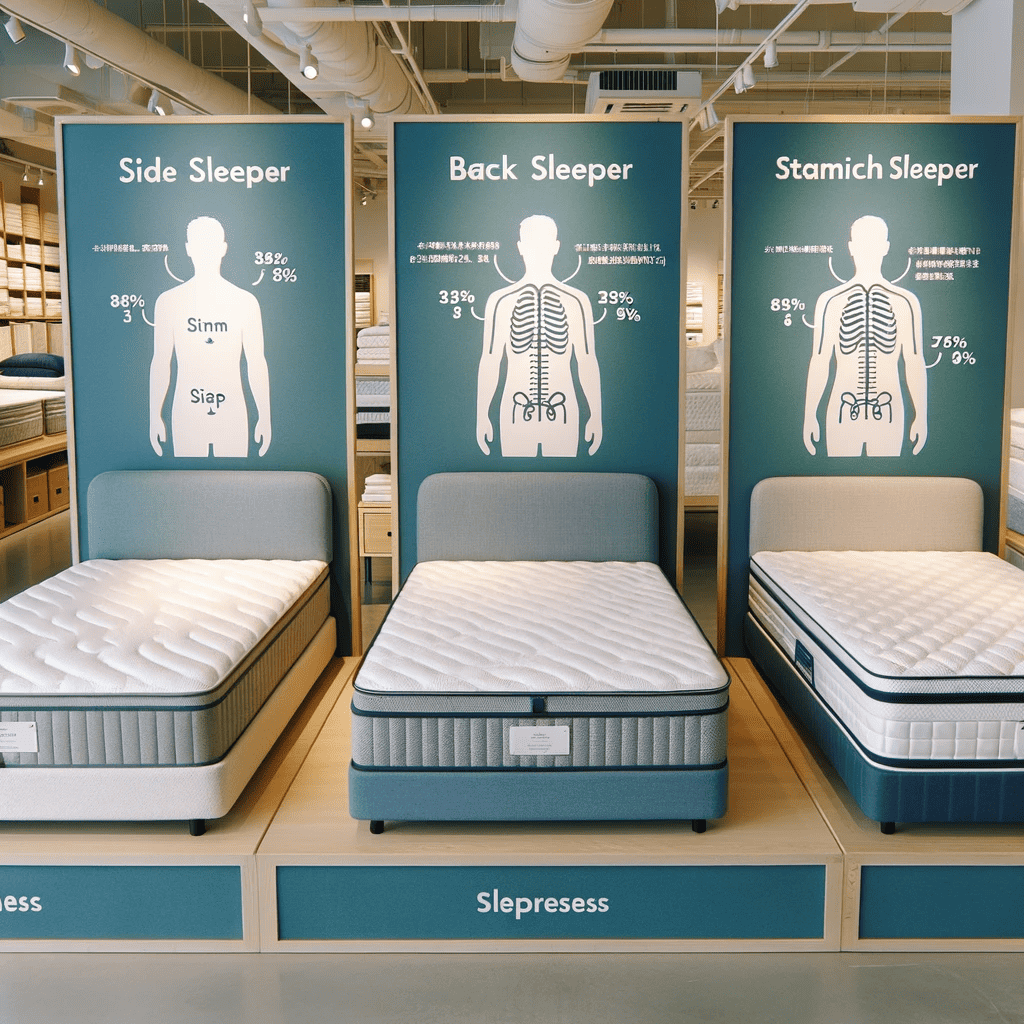
Each individual has a unique sleep style that influences their preferred sleeping position – back, side, stomach – which in turn determines specific requirements for optimal comfort and support during slumber. Back Sleepers: Those who primarily sleep on their backs typically require a medium-firm to firm mattress to maintain proper spinal alignment while avoiding sagging into overly soft surfaces.
Back sleepers benefit from mattresses with sufficient lumbar support while ensuring comfortable cushioning for other body areas such as shoulders and hips.
Side Sleepers: Side sleepers often need a slightly softer mattress that permits better contouring to shoulder and hip areas.
This reduces pressure points and allows for proper alignment of the spine. A medium to medium-soft mattress with adequate plushness can provide the necessary support while offering cozy cushioning.
Stomach Sleepers: This sleep style necessitates a firmer mattress to prevent sinking too deeply into the bed, which could lead to strain on the lower back. Stomach sleepers require proper support for their hips and abdomen to maintain a neutral spinal position throughout the night.
Understanding your sleep style is essential when selecting a mattress, as it allows you to focus on options specifically designed to meet your unique comfort and support needs. Keep in mind that individual preferences may vary, so it’s crucial to consider personal factors such as body weight, health conditions, and level of firmness desired.
Understanding Sleep Styles

Different sleep positions: back, side, stomach
When it comes to sleep, we all have our preferred positions. Whether you are a back sleeper, side sleeper, or stomach sleeper, your sleep style significantly influences the type of mattress you should choose.
Let’s delve into each sleep position and understand how it impacts your mattress selection.
1. Back Sleepers: Sleeping on your back is considered one of the healthiest positions for spinal alignment.
Back sleeping distributes weight evenly across the body and provides optimal support to the spine. As a back sleeper, you would benefit from a mattress that offers medium-firm to firm support.
Look for a mattress that contours to your body’s natural curves while maintaining proper alignment of the spine.
2. Side Sleepers: Side sleeping is one of the most common sleep positions and offers its own set of benefits and challenges.
Side sleepers often experience pressure points in their shoulders and hips due to increased weight concentration on these areas. For side sleepers, a medium-soft to medium-firm mattress with excellent pressure relief is ideal.
This allows for proper cushioning and support without causing uncomfortable pressure buildup at contact points.
3. Stomach Sleepers: Sleeping on your stomach can be challenging as it often leads to potential strain on the neck and lower back due to excessive arching or twisting of the spine.
For stomach sleepers, a firmer mattress that prevents sinking too deeply is recommended. This helps maintain proper alignment by minimizing curvature in the lower back area.
Factors influencing sleep style: comfort preferences, health conditions
While individual preferences play an important role in determining our sleep style, there are other factors beyond personal choice that can influence how we sleep.
1. Comfort Preferences: Each person has unique comfort preferences when it comes to mattresses.
Some individuals prefer a plush surface with more sinkage, while others prefer a firmer and more supportive feel. These preferences can be influenced by personal comfort experiences, body shape, weight, and overall sleep quality.
Pay attention to past experiences with mattresses, as they can provide valuable insights into the type of comfort you desire in your new mattress.
2. Health Conditions: Certain health conditions can also impact your sleep style and influence mattress selection.
For instance, individuals with chronic back pain may benefit from a mattress that offers excellent lumbar support and pressure relief. Those with arthritis or joint issues might find memory foam mattresses helpful due to their ability to mold to the body’s contours without causing additional discomfort.
Understanding your specific health conditions will enable you to focus on mattresses that provide targeted support for increased comfort and better sleep quality. By considering your sleep position and understanding how factors such as comfort preferences and health conditions influence your sleep style, you can now proceed to explore the different types of mattresses available in the market that cater specifically to your needs.
Types of Mattresses

Innerspring Mattresses: Construction and Support System Details
Innerspring mattresses are one of the most traditional and widely used mattress types. These mattresses consist of steel coils or springs that provide support and structure.
The coil count, gauge, and arrangement vary across different models, influencing the level of support and durability. Higher coil counts generally indicate better contouring to body shape and reduced motion transfer.
Additionally, the gauge of the coils affects firmness, with lower gauges offering more support. The support system in innerspring mattresses is often complemented by comfort layers made of materials like foam or fiber padding.
These layers enhance cushioning and overall comfort. Pillow-top variations further increase plushness with an extra layer sewn onto the top surface.
However, it’s important to note that innerspring mattresses may not always provide sufficient pressure relief for side sleepers or those with chronic pain issues.
Pros for Different Sleep Styles:
Back Sleepers: Innerspring mattresses can offer excellent lumbar support due to their responsive nature.
Stomach Sleepers: Firmer innerspring mattresses help keep the spine aligned for stomach sleepers.
Combination Sleepers: Innerspring mattresses tend to provide a balanced feel suitable for those who change positions during sleep.
Cons for Different Sleep Styles:
Side Sleepers: Innerspring mattresses may lack adequate contouring, potentially leading to discomfort at pressure points such as hips and shoulders.
Light Sleepers: Innersprings tend to transfer motion more than other mattress types, which can disrupt light sleepers sharing a bed.
Memory Foam Mattresses: Composition and Contouring Properties
Memory foam has gained popularity due to its unique ability to conform closely to your body’s contours while distributing weight evenly. These mattresses are made from viscoelastic polyurethane foam, which reacts to body heat and pressure.
Memory foam mattresses come in different densities, with higher densities offering greater support and durability. The contouring properties of memory foam make it well-suited for sleepers who desire pressure relief.
Side sleepers can benefit from the way memory foam cushions the shoulders and hips, aligning the spine and reducing discomfort. Additionally, memory foam’s ability to absorb motion transfer makes it a good choice for couples.
However, one potential drawback of memory foam is its tendency to retain heat. Some sleepers might find themselves feeling uncomfortably warm during the night.
To mitigate this issue, manufacturers now offer variations with cooling gel infusions or advanced airflow systems. Best Suited for Specific Sleep Styles:
Side Sleepers: Memory foam’s contouring nature provides excellent support and pressure relief at critical points.
Combination Sleepers: Memory foam responds well to changes in position due to its slow response time.
Couples: The motion isolation properties of memory foam help minimize disturbances caused by movement during sleep.
Note: If you want more information about latex or hybrid mattresses, kindly let us know!


