
Introduction
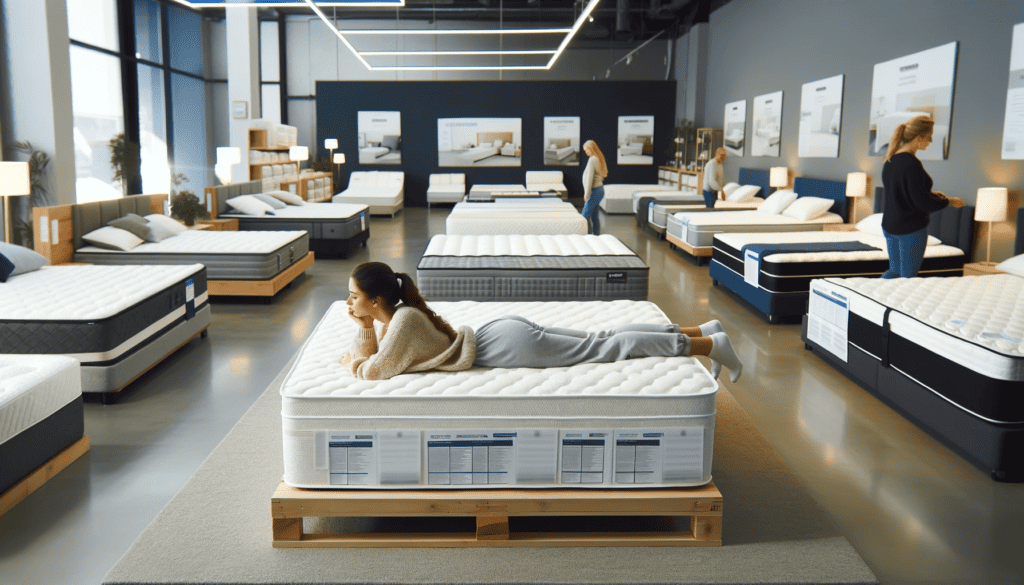
The Importance of Testing a Mattress Before Purchase

Testing a mattress before making a purchase is crucial for several reasons. Firstly, a mattress is an investment in your sleep and overall well-being. It plays a vital role in providing quality rest and ensuring proper support for your body.
By testing the mattress, you can determine whether it meets your specific needs and preferences, helping you avoid potential discomfort or sleep disturbances. Secondly, everyone’s comfort level differs, and what works for one person may not work for another.
Testing the mattress allows you to experience firsthand how it feels against your body, ensuring that it provides the right firmness or softness based on your preference. This way, you can find the perfect balance between comfort and support that suits your unique sleep requirements.
Overview of the Process of Testing a Mattress In-Store

Testing a mattress in-store typically involves visiting different retailers or showrooms to try various options. Once you arrive at the store, sales associates will guide you to their selection of mattresses, where you can begin evaluating them.
First, acquaint yourself with the different mattresses such as innerspring, memory foam, or latex. Each type has its characteristics that influence factors like firmness and responsiveness.
Next, spend adequate time lying down on each potential choice – at least 10-15 minutes – to allow your body to adjust and get a true sense of how comfortable it is. During this time, try different sleep positions that you usually prefer to assess whether the mattress adequately supports and aligns your body.
Pay attention to any discomfort or pain during this trial period, as this could indicate that the particular mattress may not be suitable for long-term use. By following these steps during the in-store testing process, you can make a more informed decision and choose a mattress that will enhance your sleep quality and overall well-being.
Understanding Your Sleep Needs and Preferences
Factors to Consider: Firmness, Support, Pressure Relief, and Temperature Regulation
Consider the firmness level that suits your comfort preferences—test mattresses with different firmness options, such as plush, medium-firm, or firm.
Assess how each firmness level aligns with your body and provides the desired level of support. Evaluate the support offered by the mattress.
Look for adequate spinal alignment to prevent discomfort or pain during sleep. A mattress that provides proper support will distribute your body weight evenly and keep your spine neutral.
Pay attention to the pressure relief capabilities of each mattress you test. Pressure points can lead to discomfort or interrupted sleep.
Look for materials like memory foam that contour your body’s shape and relieve pressure on sensitive areas such as hips and shoulders. Take note of temperature regulation features in the mattresses you try out.
Some materials have cooling properties that dissipate heat to keep you cool throughout the night, while others may retain heat. Determine which option best aligns with your temperature preferences during sleep.
Identifying Personal Sleep Habits and Positions
Observe your sleep habits and positions when considering a mattress purchase. Do you tend to sleep on your back, side, stomach, or a combination of these?
Different positions require varying levels of support. If you sleep on your back, Look for a medium-firm mattress that supports the natural curvature of the spine while providing gentle cushioning.
If you sleep on your side, Opt for a mattress with more pressure-relief properties to alleviate stress on hips and shoulders. If you sleep on your stomach, Aim for a firmer surface that keeps your spine aligned without sinking too much.
If you frequently change positions, Choose a versatile mattress that accommodates various sleeping postures comfortably. By identifying your personal sleep habits and positions and considering factors like firmness, support, pressure relief, and temperature regulation, you can narrow down the options and find a mattress that fits your specific needs for a restful night’s sleep.
Preparing for the in-store experience
Researching different mattress brands and models
1. Research various mattress brands and their reputations.
2. Compare features, materials, and technologies used by different brands.
3. Read customer reviews and ratings to gain insights into the overall satisfaction level of each brand.
4. Look for brands specializing in mattresses suited to your specific sleep needs and preferences.
5. Consider factors such as durability, warranty, and customer support the brand offers.
Setting a budget and understanding pricing options
1. Determine your budget range for purchasing a mattress.
2. Research price ranges for different mattresses such as innerspring, memory foam, or hybrid models.
3. Understand that a higher price does not always guarantee better quality or comfort; consider value for money.
4. Compare prices from multiple retailers to identify any price variations or ongoing sales/promotions.
5. Inquire about financing options or payment plans available to help manage the cost of the mattress purchase.
Overall, preparing for the in-store experience involves thorough research on different mattress brands and models while also considering your budgetary constraints and pricing options available to make an informed decision when choosing a suitable mattress that effectively meets your sleep needs.
Exploring the Showroom
Taking Note of Various Mattress Types
In the showroom, observe and take note of the different types of mattresses available, such as innerspring, memory foam, and latex. This will help you understand the options and decide which type suits your preferences and needs best.
Innerspring Mattresses: Discussing Coil Count and Gauge Thickness
When exploring innerspring mattresses, inquire about the coil count and gauge thickness. The coil count refers to the number of coils in the mattress, which can impact its durability and support.
Generally, a higher coil count signifies better support. Gauge thickness represents the coils’ thickness; a lower gauge indicates thicker coils that offer more support.
Memory Foam Mattresses: Understanding Density and Response Time
For memory foam mattresses, focus on understanding two important factors: density and response time. Density refers to how much material is used per cubic foot in the mattress.
Higher-density foams are more durable but may retain more heat. Response time relates to how quickly the foam adjusts when pressure is applied or released; a faster response time allows for ease of movement.
Latex Mattresses: Differentiating Between Natural and Synthetic Latex
When considering latex mattresses, please consider whether they are made from natural or synthetic latex. Natural latex is derived from rubber trees, while synthetic latex is made from chemical compounds.
Natural latex tends to be more eco-friendly but may come at a higher cost. It’s essential to inquire about certifications that ensure the quality and authenticity of natural latex used in the mattress you’re considering purchasing.
Testing techniques for optimal comfort assessment
Lying down on the mattress
Spending at least 10-15 minutes on each potential choice is crucial to allow your body to adjust and truly experience the mattress. This time frame allows your muscles and joints to relax, allowing you to assess how comfortable the mattress is.
Trying different sleep positions
To evaluate support and pressure relief, trying out different sleep positions while lying on the mattress is essential. Start with your preferred position, whether back, side, or stomach, and pay attention to how well the mattress aligns with your body.
Assess if there are any pressure points or discomfort in certain areas such as shoulders, hips, or lower back. Feel free to switch positions multiple times during the testing period to understand how well the mattress caters to different sleep styles.
Paying attention to any discomfort or pain during the trial period
Throughout your trial period on each potential choice, remain vigilant about any discomfort or pain that may arise. Notice if any pressure points cause discomfort over time or if you experience any pain in specific areas, such as your spine or joints. Remember that a mattress should provide adequate support for your body and alleviate pressure points rather than exacerbating them.
Trust your body’s signals during this testing phase and prioritize finding a mattress that promotes healthy spinal alignment and overall comfort throughout the night. Remember: Everyone has unique preferences regarding mattresses; what works for someone else may not work for you.
Consider factors such as firmness level, material composition (memory foam, latex), and specific features to address individual needs (such as cooling technologies). By thoroughly testing different mattresses using these techniques, you can decide which one provides optimal comfort for a restful night’s sleep.
Assessing motion transfer capabilities
Simulating partner movements on the mattress
Customers can assess the motion transfer capabilities of a mattress by simulating partner movements. They should have a friend or store associate apply different movements, such as rolling over or getting out of bed. At the same time, they lie still on the mattress.
This allows individuals to experience firsthand how much motion is transmitted from one side of the bed to the other. By observing any disturbances in their stability and comfort, customers can determine whether the mattress effectively isolates motion or if it causes excessive disturbance.
Observing how much motion is transferred across the surface
During the testing process, individuals should pay close attention to how much motion is transferred across the surface of the mattress. They can assess this by trying different movements, such as shifting positions or sitting up abruptly.
By doing so, they can gauge whether an excessive bounce might lead to sleep disruptions when sharing a bed with a partner. Additionally, customers should note any vibrations felt after these movements and consider whether they are comfortable enough to sleep through undisturbed.
The assessment of motion transfer capabilities is crucial for those who share a bed with a partner or have pets that may move during sleep. It ensures that individuals will not be overly disturbed by their co-sleepers movements throughout the night, allowing for better quality rest and undisturbed sleep cycles.
Evaluating Edge Support
Sitting or lying near the edge of the mattress
Sitting or lying near the edge of the mattress allows you to assess its edge support capabilities. Sit down on the edge and observe if it feels sturdy and supportive.
Notice any sinking or lack of stability that may indicate weak edge support. Similarly, lie near the edge and check if you feel secure and well-supported.
Noticing any sinking or lack of stability
While sitting or lying near the edge, pay close attention to any sinking sensation or lack of stability. A quality mattress should maintain consistent support even at its edges. If you experience significant sinking might indicate poor edge support, leading to discomfort and limited sleeping surface area.
Ensure that there is no excessive sagging when you sit on the side, as this could affect your overall comfort and satisfaction with the mattress in the long run. By carefully evaluating these aspects, you can choose a mattress with excellent edge support that provides optimal comfort and durability for your sleep needs.
Remember that testing a mattress in-store is crucial as it allows you to assess various important factors like firmness, support, pressure relief, temperature regulation, motion transfer capabilities, and more. During this process, take your time to find a mattress that suits your preferences and promotes restful sleep.
Checking temperature regulation features
Inquiring about cooling technologies used in mattresses
- The customer asks the store associate about cooling technologies in mattresses.
- Store associate provides detailed information about different cooling technologies available.
- The customer learns about gel-infused memory foam, phase change materials, and breathable fabric covers that regulate temperature.
- The customer asks specific questions regarding the effectiveness of each cooling technology.
- Store associate explains how these technologies dissipate heat and maintain a cooler sleep surface.
- The customer expresses interest in mattresses with advanced cooling features.
Paying attention to heat retention during the trial period
- The customer tests different mattresses and closely monitors heat retention during the trial period.
- Each night, before going to bed, the customer notes the initial temperature of the mattress surface using a thermometer.
- Throughout the night, the customer pays attention to any discomfort caused by excessive heat buildup on the mattress.
- In the morning, customer records their observations of temperature changes and any sleep disturbances due to heat retention.
- After a few nights of testing, the customer compares their experiences with different mattresses regarding temperature regulation.
- Based on their findings, the customer decides which mattress best suits their needs for regulating body heat during sleep.
- Seeking assistance from store associates
Maximizing your mattress-testing experience
1. Approach a knowledgeable store associate.
2. Engage in a conversation about your specific sleep needs and preferences.
3. Provide information on your preferred sleep position, any existing health conditions, and desired level of firmness.
4. Seek recommendations based on the gathered information, asking for options that match your requirements.
5. Inquire about any ongoing promotions or discounts to make an informed decision within your budget.
Additional questions to ask
1. Ask about the warranty and return policy for the mattresses you want to test.
2. Inquire if any trial periods are available to further assess comfort after purchase.
3. Seek clarification on the store’s exchange or refund policy if the mattress fails to meet expectations after sleeping on it at home for a few nights.
Conclusion
Testing a mattress in-store is essential to ensure it’s the right fit for you and promotes restful sleep. By creating an outline of what you’re looking for, preparing beforehand, and engaging store associates for guidance, you can optimize your mattress-testing experience.
Remember to spend ample time lying down on different mattresses, evaluating factors such as firmness, support, pressure relief, motion transfer capabilities, edge support, and temperature regulation features. Choosing the right mattress is an investment in your sleep quality. It contributes to overall well-being and productivity during waking hours.
By utilizing these techniques during the testing process and seeking assistance from knowledgeable store associates, you’ll be equipped with the necessary information to make an informed decision that suits your unique needs. Rest assured that with careful consideration and attention to detail when selecting a new mattress, you’ll soon enjoy nights of blissful slumber on a bed perfectly tailored to your sleep requirements.


